

Every age produces its visions. What separates those that endure from those that fade is execution.
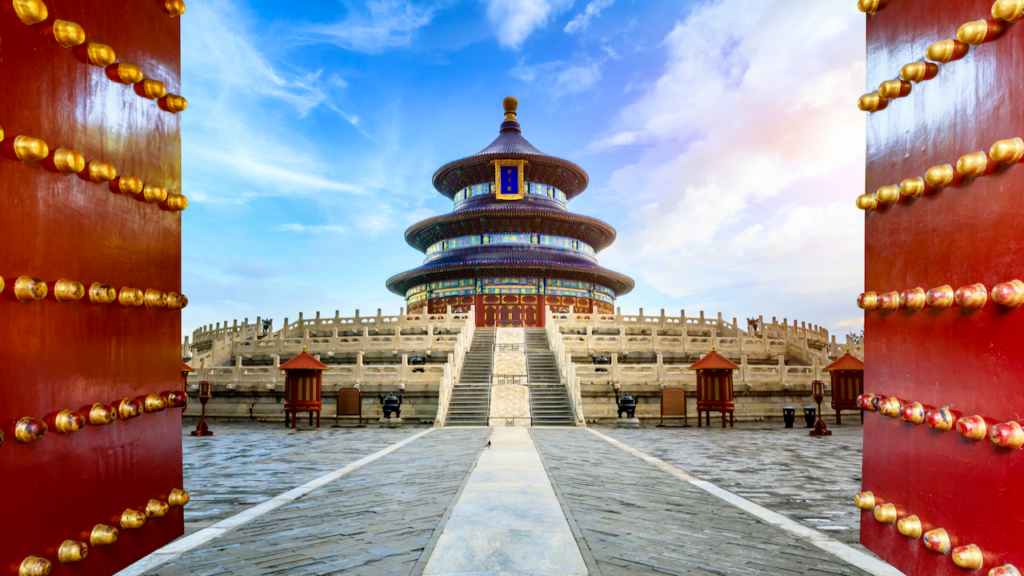
Photo: Temple of Heaven, Beijing. Credit: Shutterstock
Every age produces its visions. Societies articulate ideals, leaders issue declarations, and generations convince themselves that what they value most will naturally persist.
History is less sentimental.
It does not measure a civilization by what it aspired to be, but by what it built, sustained, and protected when circumstances changed. The difference between ideas that endure and those that fade is rarely conviction. It is execution.
Freedom, in particular, has never survived on belief alone. It survives only when ideals are translated into systems—into institutions, incentives, and habits strong enough to carry them across generations. Vision may set direction, but execution determines durability.
That is why the most consequential phase of any great project is not the moment of inspiration, but the quieter, harder phase that follows. The phase in which principles must be embedded into infrastructure. Where belief must be matched by capacity. Where values must be defended not just rhetorically, but structurally.
I was reminded of this some years ago while visiting the Temple of Heaven in Beijing. An inscription there explains, without drama or judgment, that the Almighty was worshipped on that ground for more than six centuries. Generation after generation, worship continued—until, as the inscriptions states, the twentieth century. Then worship stopped.
The inscription does not argue. It does not assign blame. It simply records the fact that a practice sustained for hundreds of years ended abruptly when a new system of power took hold.
The lesson is not about faith alone. It is about continuity. About how swiftly practices that feel permanent can disappear when the institutions, authorities, and incentives that sustain them are altered or dismantled. What endured for six hundred years did not vanish because belief evaporated. It vanished because execution—governance, enforcement, and institutional backing—changed.
This is how freedoms are most often lost. Not through sudden rejection, but through gradual misalignment. Civilizations rarely abandon their values outright. They lose them when they fail to maintain the systems that give those values durability—when aspiration remains lofty, but execution becomes fragmented, underfunded, or neglected.
The freedom to worship, to speak, to innovate, to associate—these are not self-executing rights. They depend on legal frameworks, economic resilience, trusted institutions, and the patient work of stewardship. When those foundations weaken, freedom becomes fragile, no matter how eloquently it is proclaimed.
Moments of reflection matter because they force us to confront this distinction. Vision inspires. Execution preserves.
At this time of year, many pause to think about belief, conscience, and continuity—about what has been handed down and what will be entrusted to the next generation. History’s quiet warning is that freedom does not endure by sentiment alone. It survives only when ideals are reinforced by institutions capable of sustaining them.
The work of preserving a free society is rarely dramatic. It is structural. It is cumulative. And it is never finished.
Vision may inspire us.
Execution is what allows that vision to endure.
In line with my belief that responsibly embracing AI is essential to both personal and national success, this piece was developed with the support of AI tools, though all arguments and conclusions are my own.
Author

Mark Kennedy
Director - Development Research Institute