
Featured
Preparing Talent for the AI Economy
Preparing Talent for the AI Economy
The following summarizes key insights from a panel discussion on “Preparing Talent for the AI Economy” at the NYU AI and the Workforce Conference with President Andrew Armacost of the University of North Dakota, President Pam Eddinger of Bunker Hill Community College, and President Todd Saliman of the University of Colorado, moderated by NYU DRI […]
Learn MoreAllied Sovereign-Private Partnerships: Aligning Fiduciary Duty with Strategic Competition
Allied Sovereign-Private Partnerships: Aligning Fiduciary Duty with Strategic Competition
The second SPP essay, built around the U.S. government’s transaction with MP Materials, concluded that strategic competition requires a deliberate allied architecture spanning capital, infrastructure, and industrial capacity. This article examines one of the earliest instances of that architecture taking institutional form: the restructuring of Syrah Resources, in which sovereign and allied institutional capital were […]
Learn MoreWISC Dialogues: Global Fellow Courtney Finger on FDI
WISC Dialogues: Global Fellow Courtney Finger on FDI
NYU WISC Dialogues: Foreign Direct Investment Guest: Courtney Fingar, WISC Global Fellow DRI Director Mark Kennedy sits down with WISC Global Fellow and foreign direct investment expert Courtney Fingar to examine the shifting landscape of global capital flows amidst trade protectionism and rising geopolitical tensions. The discussion analyzes how industrial policies, increasing supply chain transparency, […]
Learn MoreBuilding the Institutions of Strategic Capital
Building the Institutions of Strategic Capital
The following insights emerged from a WISC roundtable with senior leaders from government, finance, industry, academia, and think tanks. Held under the Chatham House Rule, they examined how democratic societies can mobilize capital at strategic scale. The old economic playbook in democratic economies drew a strict boundary between public governance and private capital. State intervention […]
Learn MoreWISC Dialogues: NYU Law Professor Robert Howse
WISC Dialogues: NYU Law Professor Robert Howse
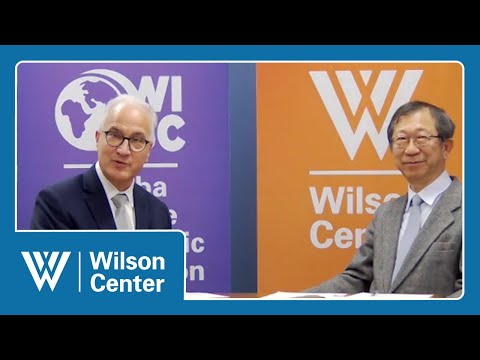
NYU WISC Dialogues: WTO and the New Geopolitics of Trade Guest: Robert Howse, Lloyd C. Nelson Professor of International Law at NYU School of Law DRI Director Mark Kennedy and NYU Law Professor Robert Howse explore how the World Trade Organization (WTO) can adapt to a rapidly changing global economy shaped by strategic competition, supply […]
Learn MoreFrom Public-Private Partnerships to Sovereign-Private Partnerships: Why Infrastructure Should Become Statecraft
From Public-Private Partnerships to Sovereign-Private Partnerships: Why Infrastructure Should Become Statecraft
Introduction By Mark Kennedy Infrastructure is increasingly a domain of strategic competition. Ports, logistics corridors, digital networks, AI infrastructure, and energy systems now shape not only economic performance, but also resilience, sovereignty, and geopolitical alignment. As strategic competition intensifies, governments and private actors alike are reassessing how capital is deployed, how infrastructure ecosystems are governed, […]
Learn MoreDRI Dialogues: Gareth Davies MP on Geofinance
DRI Dialogues: Gareth Davies MP on Geofinance
NYU DRI Dialogues: Financial Power and Statecraft Guest: Gareth Davies, British Member of Parliament DRI Director Mark Kennedy sits down with Gareth Davies MP to discuss how financial power is a quantifiable form of state power, distinct from a nation’s GDP and military capacity. Mr. Davies contends that in an era of intense strategic competition, a […]
Learn MoreThe Sovereign AI Architects
The Sovereign AI Architects
By Winston Ma, DRI-WISC Affiliate, Executive Director of NYU’s Global Public Investment Funds Forum (GPIFF), and Adjunct Professor, NYU School of Law This case study examines how Gulf region sovereign wealth funds—particularly in Abu Dhabi—are building AI capabilities across the full technology stack. While not universally replicable, the model offers insight into how capital, energy, […]
Learn MoreScaling Infrastructure Investment in the Global South
Scaling Infrastructure Investment in the Global South
Systemic risks continue to stifle critical infrastructure investments across the Global South. Chronic underinvestment is driven primarily by currency convertibility constraints, regulatory volatility, and rapid technological obsolescence. To bridge this financing gap, emerging strategies focus on distributing risk through structured public-private partnerships (PPPs) and deepening strategic coordination among the world’s development finance institutions (DFIs). To […]
Learn MoreWhy America Struggles to Compete on Global Infrastructure
Why America Struggles to Compete on Global Infrastructure
The United States has awakened to the reality that supporting international infrastructure is no longer just a development issue. Infrastructure—digital networks, energy systems, and ports—is now central to strategic competition. Washington has responded. The U.S. International Development Finance Corporation (DFC) has expanded its authorities, in line with recommendations we advanced. The Export-Import Bank of the […]
Learn MoreFrom Architecture to Execution: What It Will Take to Scale a Trusted AI Stack
From Architecture to Execution: What It Will Take to Scale a Trusted AI Stack
The United States has stated a compelling objective: enable broad global access to U.S.-aligned AI systems while maintaining credible safeguards against military misuse and coercive deployment. While the architecture is taking shape, the more difficult task lies in execution. Recent discussions among industry, finance, government, and international participants highlighted that the central challenge is no […]
Learn More360° View: Scaling Trusted AI in a Fragmented World
360° View: Scaling Trusted AI in a Fragmented World
360° View: Scaling Trusted AI in a Fragmented World By Mark Kennedy, NYU DRI Director If America wants to expand global access to U.S.-aligned AI while preventing adversaries from acquiring military-relevant capabilities, policymakers must focus on more than controlling algorithms. They must also focus on shaping systems. AI competition is no longer about who invents […]
Learn MoreAI as a Systems Race
AI leadership is decisive. Open societies must compete across the full stack—chips, compute, cloud, energy, data, applications, and standards—to ensure trusted, scalable, and widely adopted systems prevail.
Productive Capacity
Productive capacity must be resilient and scalable. Targeted production, diversified sourcing, and expanded trade reduce vulnerability while sustaining innovation, industrial strength, and long-term competitiveness.
Strategic Infrastructure
Infrastructure determines whether systems can be built and scaled—linking partners, powering compute, and enabling the flow of goods, energy, and data. The goal: systems that deploy quickly, attract capital, and expand choice rather than create dependency.
Modernizing Alliances
To compete at scale and speed, alliances must evolve—aligning across technology, finance, production, and governance to convert shared capabilities into sustained strategic advantage.
Rajeev Dehejia
Faculty Co-Director
"To advance prosperity for all we need to connect rigorous development research with the systems that shape it—economics, governance, technology, and infrastructure."
Sadek Wahba
Chair of WISC GAC, DRI Senior Fellow
"Infrastructure is no longer just an economic issue—it's central to freedom, resilience, and strategic alignment. DRI with WISC ensures we think holistically and act decisively."
Mark Kennedy
Director, Wahba Institute for Strategic Competition
"Freedom rests on economic foundations. DRI with WISC brings together leading minds and policy actors to reinforce those foundations where development and strategic competition converge."