

Insights from an NYU Roundtable on Strategic Infrastructure Finance
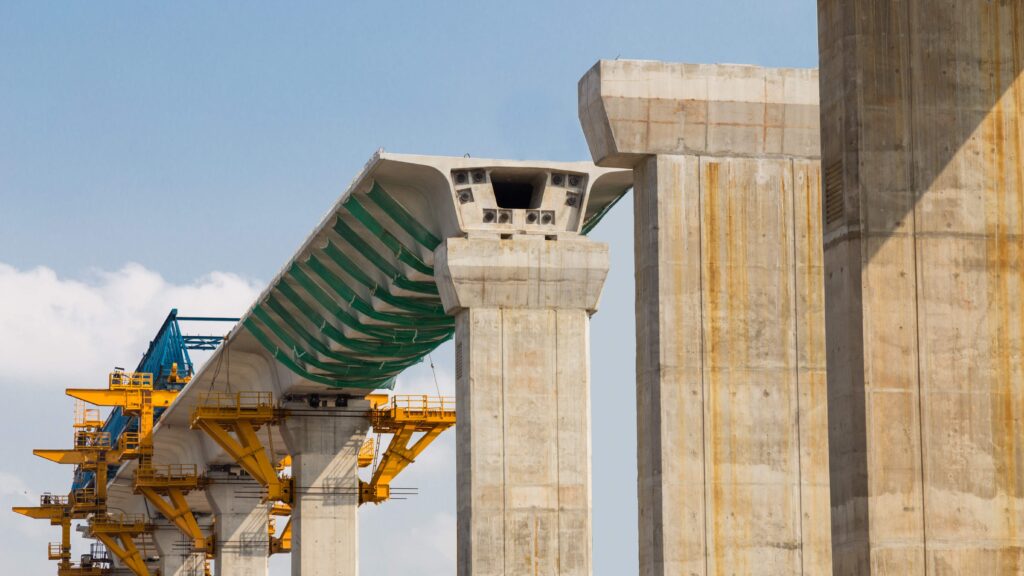
The United States has awakened to the reality that supporting international infrastructure is no longer just a development issue. Infrastructure—digital networks, energy systems, and ports—is now central to strategic competition.
Washington has responded. The U.S. International Development Finance Corporation (DFC) has expanded its authorities, in line with recommendations we advanced. The Export-Import Bank of the United States (EXIM) has taken on a more explicitly strategic mandate. Critical minerals, energy infrastructure, and digital connectivity are now receiving increased attention.
Yet despite this shift, the United States struggles to fully translate its competitive advantages into high-impact infrastructure projects abroad. The problem is not lack of capital or intent. Rather, a set of structural barriers prevents fast, unified action.
A recent roundtable convened by NYU’s Wahba Initiative for Strategic Competition (WISC) on strategic infrastructure finance, which brought together experts from government, industry, and finance, explored why the United States continues to struggle to translate its advantages into action. Participants identified key factors contributing to slower, more fragmented investment—if any investment occurs at all. Factors include tensions between public and private entities, fragmentation across government agencies, misalignment among allies, insufficient project preparation, and constraints embedded in policy design.
1) Strategy vs. Return: The Public–Private Divide
The U.S. government seeks to secure supply chains, shape standards, and anchor long-term relationships in key regions. Infrastructure can advance these goals—but it is expensive. Very expensive. And the United States cannot fund it alone.
The private sector, which holds the key to capital and expertise, evaluates opportunities through a financial lens, not a strategic one.
These perspectives are not inherently incompatible. But they diverge most sharply in the sectors that matter most for long-term competition—upstream mineral processing, early stage infrastructure, and system-shaping projects that determine how entire markets or networks (not just a single asset) operate.
Many of the most strategically important projects do not meet conventional investment thresholds. They are capital intensive, slow to generate returns, and exposed to political and operational risk. Private capital often hesitate when it compares strategically important projects to safer, higher-return opportunities in the United States.
Public institutions—including DFC and EXIM—are often willing to step in, but they can struggle to find private partners. The prolonged search for a buyer for a critical cobalt mine illustrates the problem: even clear strategic importance was not enough to overcome perceived risk.
The result is predictable—underinvestment in precisely the areas where long-term advantage is necessary.
Possible Solutions / Areas for Further Study:
Areas for further study include whether a coordinated “Team USA + allies” approach can expand the private-sector pool of participants; the degree to which existing U.S. tools—such as DFC equity authority and Office of Strategic Capital investments—can function analogously to sovereign wealth funds in absorbing early risk; the role of first-loss capital, blended finance, and project bundling in making marginal projects investable; and how to better align incentives across agencies and allies.
2) The Missing Middle: Project Preparation
The challenges of navigating the U.S. system are particularly visible in project preparation.
While financing tools have expanded, support to enhance early stage capacity has not kept pace. Feasibility studies, regulatory alignment, technical design, and local coordination remain persistent bottlenecks.
This creates a paradox: capital is available—but projects are not ready. And without prepared projects, financing cannot flow.
Here again, competitors often take a different approach. They present a single, integrated offering—combining project preparation, financing, and delivery. Decisions are centralized, processes streamlined, and timelines compressed.
Possible Solutions / Areas for Further Study:
The solution here is more straightforward than in other areas. Funding for the U.S. Trade and Development Agency (USTDA) remains small relative to its impact. As of late 2024, USTDA reports that every $1 invested generates approximately $231 in U.S. exports. Expanding support for project preparation would help alleviate the bottleneck and unlock downstream investment.
3) Fragmentation Within the U.S. Government
There is no clear or single point of entry for infrastructure support. Companies and partner countries must navigate a complex landscape: DFC for development finance, EXIM for export credit, USTDA for project preparation, the Department of Energy for technical assistance, and the State Department for diplomatic engagement. Each entity plays an important role—but coordination is inconsistent.
This results in a web of overlapping reviews, approvals, feasibility studies, and regulatory requirements that, while individually justified, collectively slow progress.
Possible Solutions / Areas for Further Study:
Areas for further study include how to strengthen interagency coordination across U.S. infrastructure tools and whether designating a clear lead—either within the National Security Council or a lead agency—for priority initiatives such as AI stack diffusion, critical minerals, and strategic ports would improve speed, coherence, and execution.
4) The Alliance Coordination Problem
Coordination challenges extend beyond the U.S. government to include allies.
Allied countries bring significant capabilities—capital, technology, and expertise—but aligning those capabilities is difficult. Interests overlap but do not fully align. Firms compete even as governments seek cooperation. Decision-making processes are not synchronized.
The result is often parallel efforts rather than integrated ones. Instead of leveraging comparative advantages, countries duplicate them. What could be a system of complementary projects becomes a set of loosely connected—and sometimes overlapping—initiatives.
Possible Solutions / Areas for Further Study:
Areas for further study include whether more structured allied coordination can better align priorities and timelines; how to allocate roles based on comparative advantage rather than duplication; the feasibility of joint project pipelines or co-developed platforms; how to align standards earlier in project design; and whether designating a lead country or coordinating entity for selected efforts would improve execution.
5) Keeping Competitive on Strategic Projects
Much of the roundtable discussion focused on how best to address competitors that provide government-backed support for infrastructure projects, reflecting the geopolitical value of sectors such as telecommunications, nuclear power, and ports. Two key areas stood out:
State Department Support
Roundtable participants highlighted the role that USAID has played in providing host nations administrative capacity building and workforce development relative to infrastructure projects—efforts that can help level the playing field in competitive bids. Expanding such support through the State Department for strategic projects was seen as an important differentiator.
Transactions vs. Systems
U.S. projects are typically evaluated individually. Risks are assessed deal by deal. Financing is structured project by project. Competitors, by contrast, focus on building systems—networks of infrastructure, data, and influence that reinforce themselves over time. Each project increases usage, lowers costs, and attracts complementary investment aligned to common standards, with the expectation that system-level returns will exceed the sum of individual projects.
By contrast, the U.S. approach, focused too narrowly on transactions, struggles to keep pace.
Possible Solutions / Areas for Further Study:
Areas for further study include how infrastructure can be evaluated at the system level; whether bundling projects into integrated platforms can better capture scale and attract capital; the role of standards and vendor ecosystems in shaping long-term outcomes; how to incorporate follow-on effects (such as data flows and supply chain linkages) into investment decisions; and further examination of State Department programs.
6) Hurdles Addressed by the AI Export Program
Policy considerations introduce further complexity, particularly in technology infrastructure.
Export controls, security requirements, and governance standards are essential. They protect sensitive technologies and ensure responsible use. But they can also constrain deployment—slowing timelines, increasing complexity, and limiting access for partner countries.
At the same time, competitors operate with a different model. They not only support comprehensive technology “stacks,” but integrate financing, construction, operations, and long-term presence into a single offering. Their approach is reinforced by sustained diplomatic engagement promoting infrastructure projects in target markets.
By contrast, U.S.-aligned projects can be more difficult to structure. Partners face barriers to access. Projects become fragmented across vendors and requirements. Alternatives—though often less aligned with long-term interests—can appear faster, simpler, and more accessible.
The AI Export Program is designed to address this gap. It enables secure, trusted deployment of advanced technologies at scale while preserving necessary safeguards.
Possible Solutions / Areas for Further Study:
Areas for further study include how to apply conditions more precisely; whether trusted partners can be given faster access through pre-approved pathways; how to structure integrated, exportable technology stacks combining hardware, software, telecommunications, financing, and services; how to better align U.S. and allied standards; and how to make U.S.-aligned offerings easier to deploy than competing alternatives.
The discussion also highlighted the potential need for a similar approach beyond digital infrastructure—particularly for nuclear energy, where integrated project “stacks” could combine financing, construction, fuel supply, regulatory support, and long-term operations.
Other Topics Discussed
Other topics discussed included the risk of losing focus on lower-income countries as U.S. engagement expands, the lack of a unified infrastructure strategy, the gap between transactional partnerships and system-level alliances, the limits of multilateral tools for strategic competition, and the challenge of balancing speed with long-term capacity building.
Enhancing America’s Posture in Infrastructure Support
None of these challenges are insurmountable. Many reflect deliberate choices—market discipline, institutional diversity, alliance coordination, and a commitment to high standards.
The issue is not their presence, but a lack of alignment among them.
A more coherent approach is required, which integrates economic objectives, national security priorities, and alliance coordination into a unified infrastructure strategy.
That means clearer strategic prioritization, stronger coordination across agencies, deeper integration with allies, expanded investment in project preparation, and a greater willingness to support strategically important projects whose returns may not be immediate.
Most importantly, it requires a shift in perspective—from transactions to systems, and from what can be financed to what must be built.
In today’s environment, the decisive question is not simply who can invest. It is who can invest in ways that deliver infrastructure at scale, at speed, and with lasting effect.
Author

Mark Kennedy
Director - Development Research Institute

Jeffrey Kucik
WISC Global Fellow