

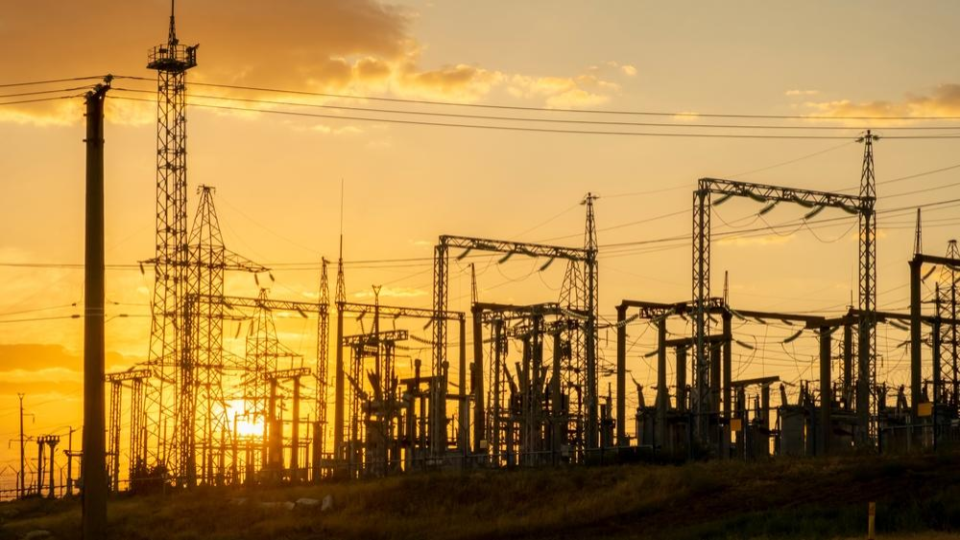
The next AI bottleneck may not be a model, a chip, or a regulation. It may be a substation
For the past several years, the artificial intelligence debate has revolved around models. Which system is most capable? Which company is ahead? Which country controls the most advanced chips? Which rules should govern safety, bias, copyright, privacy, and national security?
Those questions still matter. But they are no longer enough.
AI has entered a different phase. It is moving from experimentation to deployment, from software breakthroughs to industrial buildout, from clever applications to systems that require enormous physical support. In an earlier essay, I argued that AI is infrastructure, not software. If AI is infrastructure, then power is its first policy constraint.
The AI race will not be won by the country with the best model. It will be won by the coalitions that can generate, transmit, permit, finance, and locally sustain the electricity needed to run AI at scale. That is a different kind of competition — and the gap between where we are and where we need to be is outpacing policymakers’ actions.
The Numbers Have Changed the Conversation
Consider what is already happening. Global data center electricity demand will exceed 1,000 terawatt-hours this year — more than the entire electricity consumption of Japan. In the United States, the Department of Energy estimates that data centers could consume up to 12 percent of total U.S. electricity by 2028, up from 4.4 percent in 2023. A single AI training facility can require 100 to 500 megawatts of continuous power — comparable to the electricity demand of a small city.
The buildout is accelerating at a pace that is outrunning the infrastructure needed to support it. U.S. data center construction spending reached $49.5 billion through April 2026 — nearly four times the pace of a year ago. But nearly half of the 12 gigawatts of data center capacity planned for 2026 is already facing delays or cancellations. The bottleneck is power hardware.
Transformer lead times, which ran 24 to 30 months before the AI build-out began, now stretch to four or five years. AEP Ohio has paused all new data center interconnections because the grid cannot absorb the load. And there is a supply chain dimension that has received almost no attention in AI policy circles: China remains the world’s largest producer of the electrical gear — transformers, switchgear, substations — needed to connect data centers to the grid. America’s AI ambitions are being constrained, in part, by supply chain vulnerabilities it is trying to reduce everywhere else.
Software can be copied instantly. Power cannot. A model can improve in weeks. A transmission line can take years. This asymmetry is now the defining constraint of the AI era.
Three Implications for Policymakers
1. Energy Policy Is Now AI Policy
Permitting reform, transmission buildout, generation adequacy, nuclear deployment, gas reliability, renewables integration, grid-scale storage, cooling efficiency, and utility planning are integral to technology strategy.
The private sector has begun to act. Meta announced agreements with TerraPower, Oklo, Vistra, and Constellation Energy to secure up to 6.6 gigawatts of nuclear capacity. Microsoft struck a 20-year deal to revive Three Mile Island. Amazon secured 1,920 megawatts of nuclear power through 2042. These are AI infrastructure decisions — and they reflect a recognition that the companies serious about deploying AI at scale cannot wait for someone else to solve the power problem.
Government needs to catch up. The interconnection queue, transformer supply chain, and local permitting process are now strategic bottlenecks. Treating them as routine utility matters while treating AI as a software governance question is a category error. In the first phase of the AI race, chips were the scarce input. In the next phase, power availability may determine where compute can be deployed — and which countries can sustain it.
2. AI Infrastructure Must Earn Local Legitimacy
Communities are asking valid questions. Who pays for grid upgrades? Will residential rates rise? How much water will be consumed? Will backup generation and noise affect nearby residents? Will the benefits accrue locally, or only to a handful of distant firms?
Goldman Sachs has warned that data center electricity demand will boost core inflation by 0.1 percent in both 2026 and 2027. One Carnegie Mellon analysis estimates that data centers and cryptocurrency mining could lead to an 8 percent increase in the average U.S. electricity bill by 2030 — potentially exceeding 25 percent in the highest-demand markets. These are not abstract concerns. They are the foundation of a political backlash that could slow AI deployment more than any regulation.
The answer is to build a better bargain. Data center developers, utilities, states, and federal agencies should make clear what infrastructure will be added, who will pay, how local reliability will be protected, how water use will be managed, and what workforce and tax benefits communities can expect. The public does not need another abstract promise about innovation. It needs evidence that the infrastructure serving AI will also serve the communities hosting it.
3. Allies Need an AI Power Compact
The AI race is increasingly a systems race. Success requires deploying trusted AI stacks. Alliance systems play an essential role in an era of technological acceleration. Power belongs at the center of that agenda — and the transformer supply chain vulnerability adds a dimension that has been almost entirely absent from allied coordination discussions.
The United States, Europe, Japan, South Korea, Canada, Australia, and other partners should coordinate not only on chips and model safety, but on the physical capacity to deploy AI. That means aligning standards for trusted data centers, sharing best practices on grid-responsive computing, rebuilding supply chains for transformers and power equipment outside of China, expanding nuclear and advanced energy cooperation, and financing AI-enabling infrastructure in partner countries.
A Straightforward Policy Agenda
The priorities are clear. Treat AI power demand as a strategic planning category, not merely a utility queue. Accelerate transmission and interconnection reform where there are bottlenecks. Diversify the transformer and power equipment supply chain away from China. Expand generation — particularly nuclear — that can support reliable, affordable, clean growth. Encourage data centers to become grid-responsive, shifting workloads where possible and reducing demand during stress periods. Support local communities with transparent benefit agreements. Build the skilled workforce needed for electrical construction, cooling systems, and grid operations. Coordinate allied financing for AI-enabling infrastructure abroad.
AI leadership now depends on infrastructure decisions that markets alone will not always coordinate quickly enough. The supply chains underpinning those decisions carry the same geopolitical risks as every other input to the technology competition.
The most important AI policy may not sound like AI policy at all. It may sound like permitting. It may sound like transformers. It may sound like rate design, water management, nuclear licensing, skilled trades, and regional transmission planning.
The next era of AI will belong not only to those who invent, but to those who build. If free societies want trusted AI systems the world will choose, they must prove they can supply the power those systems require. Power is no longer behind the AI race. It is the race.
Author

Mark Kennedy
Director - Development Research Institute