

The current decade has not been kind to proponents of the globalization of trade, finance, and investment, including those who advocate for multilateral agreements aimed at boosting commerce across the globe. Many industrial and emerging markets have turned inward, to greater and lesser degrees, as protectionism, nationalism, and populism have put a damper on the flow of goods and services across national boundaries.
Latin America is illustrative. As the International Monetary Fund reports, while the region has made some progress on trade openness, it continues to be held back due largely to poor infrastructure, burdensome customs clearance procedures, and relatively high tariff and non-tariff barriers to trade. One important measure of trade openness, the sum of exports and imports of goods and services, stands at just 47% of gross domestic product. That’s about 20 percentage points below the level for emerging markets in other regions.
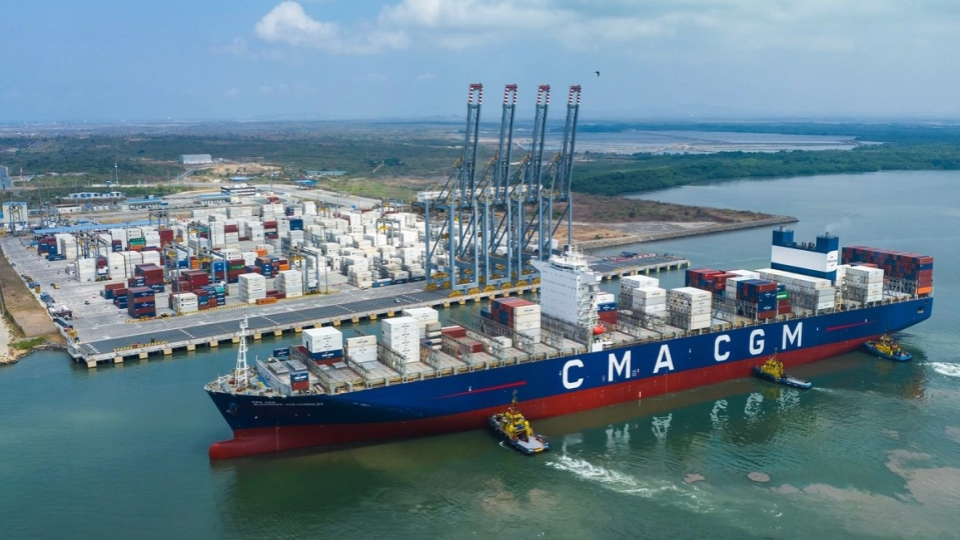
For Latin American economies that depend on exports, overcoming tariff and non-tariff barriers is not straightforward. But there are opportunities for facilitating trade. One option is to increase the efficiency of seaports, to promote regional integration and give Latin America a greater role in global supply chains.
Today, far too many ports in Latin America have outdated infrastructure and insufficient equipment, limiting their handling capacity and speed. To improve performance, they must invest in modernization and expansion. Another problem is that bureaucratic processes, such as customs and administrative procedures, are often lengthy and complex, causing delays and increasing costs. Streamlining procedures, including through digitalization, is vital.
Still another challenge is limited access to ports, the result of inadequate rail and highway networks. Securing investment in transportation infrastructure, including in rural areas, has been a persistent challenge, and is likely impossible absent public-private partnerships that involve private capital.
Finally, there are environmental concerns. Ports need to adopt more sustainable practices and infrastructure to mitigate environmental impacts.
In these areas and other areas, regional cooperation could help, including by standardizing procedures, lowering trade barriers, improving interconnectivity, and training port officials and workers to improve productivity. Jointly and independently, Latin American ports could also diversify their operations, offering warehousing, container maintenance, and advanced logistics services.
Finally, Latin American ports could adopt and adapt new technologies to increase efficiency and reduce costs. Digital technologies like blockchain, IoT (internet of things), and AI (artificial intelligence) could improve logistics management, predictive maintenance, and security. Notably, there are examples in the region, including Bahía Blanca in Argentina, Cartagena in Colombia, and Itaquí and Santos in Brazil.
Another model is the Port of Santos in Brazil. The port, the largest in Latin America, is continually expanding and modernizing. In Panama, the Port of Balboa, strategically located at the Pacific entrance of the Panama Canal, has also invested heavily in modernization to handle the increasing volume of global trade passing through the canal. In Mexico, the Port of Manzanillo is one of the fastest-growing in the region, committed to expanding infrastructure and upgrading technology.
Improving port efficiency in Latin America is critical for economic growth and competitiveness. Brazil, Chile, Ecuador, Panama, and Uruguay are regional leaders in port infrastructure, but there are significant opportunities for improvements throughout the region, through technological innovation, infrastructure upgrades, regulatory reforms, and increased regional cooperation.
Originally published at the Wilson Center
Author

Jerry Haar
WISC Global Fellow