

Mining and stockpiles are not enough. Mineral security requires a competitive system spanning recovery, extraction, refining, advanced operations and manufacturing.
Washington is assembling the pieces of a serious critical-minerals strategy. It is accelerating domestic projects, negotiating supply agreements with allies and supporting new processing capacity. Last Thursday, President Trump extended the Defense Production Act authority to recoverable critical minerals, potentially restricting exports of mineral-rich batteries, electronic waste and industrial scrap.
That is a useful addition. But America still tends to treat mineral security as a collection of individual transactions: approve a mine, finance a refinery, sign an offtake agreement, build a stockpile or retain more scrap. China approaches it as an operating system.
The difference is visible across the rare-earth supply chain. China produced about 60 percent of mined magnet rare earths in 2024, but its share rose to 91 percent of refined output and 94 percent of sintered permanent magnets. The concentration increases at each stage because China connects extraction to processing expertise, equipment, financing, infrastructure development, manufacturing, and customers.
The supply chain outside of China remains badly unbalanced. The International Energy Agency estimates that announced diversified mining capacity could exceed 50 kilotonnes by 2035. However, planned refining capacity lags behind at 40 kilotonnes, while planned metal, alloy and finished-magnet capacity is even more limited at 18 kilotonnes—only about one-third of the potential mine supply. More ore will not resolve a bottleneck if downstream processing and manufacturing system is controlled elsewhere.
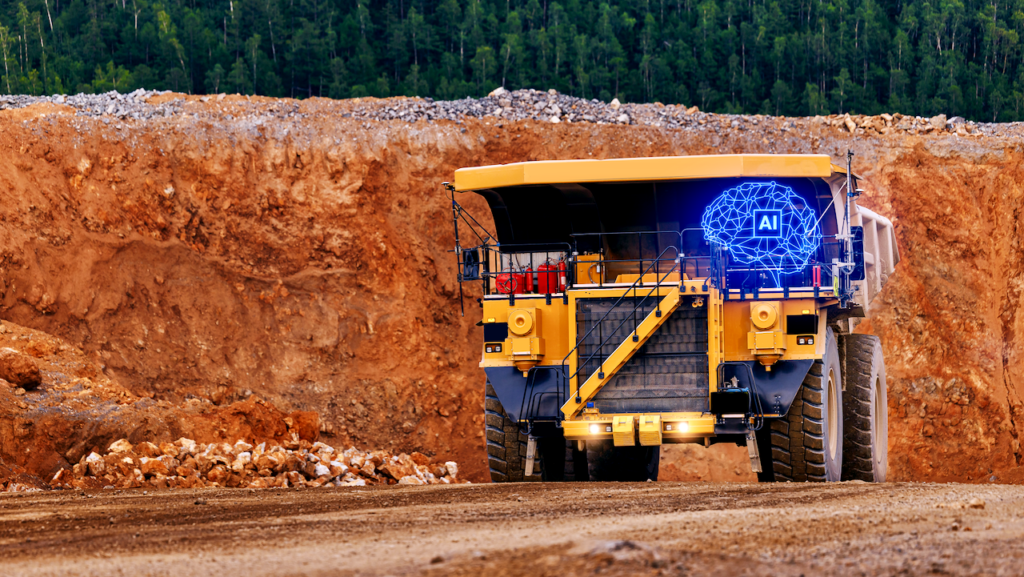
The competition is also technological. China is applying AI, autonomous vehicles, advanced sensors and electrification to mining. In 2025, China Huaneng Group commissioned 100 autonomous electric haul trucks at an Inner Mongolian mine. Chinese regulators have since launched a national mining-robot validation program covering excavation, extraction, transport, processing, safety and emergency response.
If China establishes the safest and lowest-cost production model, Western mines may remain commercially marginal even when deposits and permits are available.
America therefore needs to organize policy around the full operating system.
First, federal support should be directed towards complete production pathways rather than isolated facilities. A mine seeking public assistance should show how its output will be processed, transported and purchased—and how automation, data and advanced equipment will make the operation globally competitive.
Second, recoverable minerals should be managed as industrial feedstock. Keeping batteries and electronic scrap in the United States is only the beginning. Collection, sorting, traceability, recovery technology and domestic customers must be connected so retained material returns to production.
Third, allied agreements should divide capabilities intelligently. Every country does not need a complete national supply chain, but the trusted network collectively needs deposits, processing, equipment, software, financing, skilled workers and downstream manufacturing. Those capabilities should be mapped before governments subsidize duplicative or stranded projects.
Finally, public financing and purchasing should catalyze measurable productivity, resilience and output, rather than focusing on the ceremonial opening of facilities that cannot survive without permanent support.
Mineral security will not be secured by possessing more rocks. It will be secured by an integrated system that can turn primary and recovered material into affordable components at scale. America is accumulating the pieces. It now needs to make them operate as a whole.
Author

Mark Kennedy
Director - Development Research Institute