

The architect of America’s political system understood that Virginia’s economic model was not just immoral, it was failing. He never found a way out. There is a lesson in that for America today.
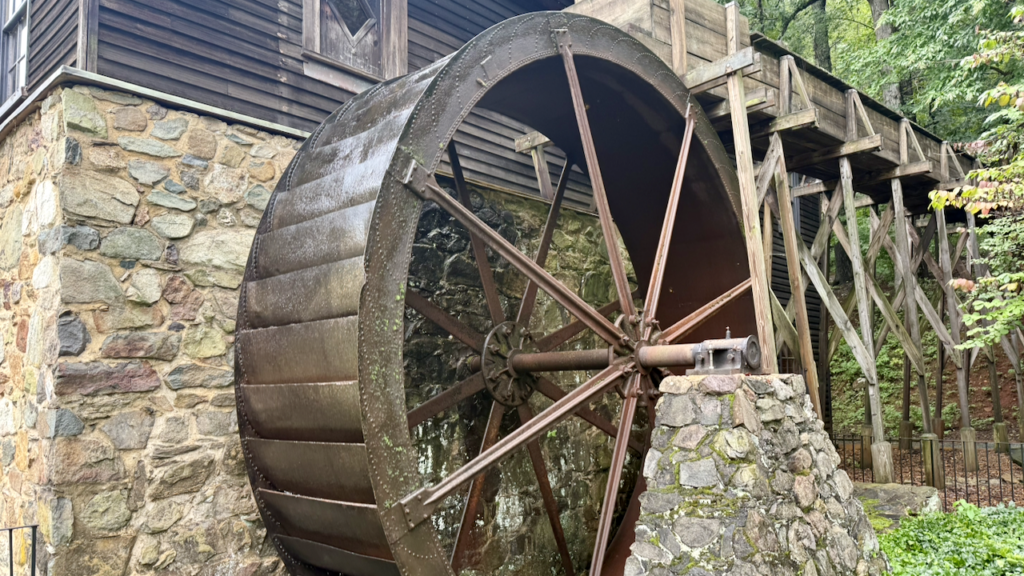
I recently visited James Madison’s Montpelier, and it is hard not to see one of the great paradoxes of the American founding.
Few people thought more deeply about how systems shape behavior than Madison. He understood that good government could not depend on everyone behaving virtuously — interests compete, incentives matter, power accumulates — so institutions have to be designed to make those forces produce tolerable outcomes. When he concluded the Articles of Confederation were inadequate, he did not propose running them a little better. He helped design a new architecture.
Yet Madison spent his final years inside another system whose foundations were failing, and this time he never found the equivalent of a Constitutional Convention to correct course. Virginia’s tobacco economy was exhausting the soil, and competition was shifting to richer land farther south and west. Madison saw it clearly — in an 1818 address to the Agricultural Society of Albemarle, he described in detail how repeated cultivation without restoring nutrients had left Virginia’s farmland impoverished. He predicted the shift away from Virginia tobacco as early as 1784. He understood the problem. He never solved it. By his own account to Jefferson, Montpelier produced barely a tolerable crop some years, and he was living substantially on borrowed money.
That system, like Mount Vernon’s, depended on enslaved labor — roughly 100 people at Montpelier during Madison’s retirement. Madison recognized slavery’s contradiction with the republic he had helped build, yet his will freed no one. His financial distress does not excuse that choice. It illustrates something separate and important about systems — that seeing an arrangement is unsustainable is not the same as having a viable way out of it.
George Washington faced nearly the same disruption a half a century earlier and answered it differently. By the 1760s he judged tobacco a dead end — poor soil, volatile prices, dependence on British merchants — and pivoted to wheat. But he did not stop at swapping one crop for another. He rebuilt the ecosystem around it: crop rotation to restore the soil, a commercial gristmill that turned wheat into flour for broader markets, then a distillery that turned grain into a still higher-value product. He moved up the value chain instead of just changing what he grew.
That contrast is the point. Madison could diagnose a failing system as well as anyone alive. Diagnosis did not produce an exit. Washington built one.
America is living a version of Madison’s problem now. Decades of success in software and finance, and a fast-won early lead in frontier AI, do not guarantee leadership as intelligence moves into the physical economy — factories, robots, vehicles, the grid. The United Nations Industrial Development Organization projects China’s share of global manufacturing will reach 45 percent by 2030, against roughly 11 percent for the United States — concentration on a scale with no real precedent in the modern industrial era, and a resilience risk as much as a competitive one. That transition needs capabilities the digital era let us undervalue: electricity and transformers, critical-minerals processing, machine tools, sensors, skilled trades, and the ability to permit and finance all of it at speed. A world-leading model without the industrial base to deploy it is Virginia’s mistake run in reverse — the valuable piece of the system mistaken for the system itself.
The fix is not exhortation. Madison’s real genius was never assuming people would act against their own interests — he built institutions that made self-interest serve the common good. Rebuilding productive capacity requires the same discipline: trade policy, permitting, tax treatment, procurement and development finance aligned so that companies, investors and allies find it in their own interest to build the capacity the country needs.
The open question is the harder one, and it is the one WISC’s Productive Capacity research is built to test. The exposure is not really that comparative advantage has shifted — it is that concentration on this scale leaves the system unable to absorb a shock: a blockade, an export-control fight, a disruption at a single dominant supplier. Building resilience against that kind of stress does not mean re-shoring everything; it means building the alternative, as I’ve argued elsewhere: an ecosystem of trusted trading partners who together hold the capacity no single country holds alone. What specific alignment of policy, incentive and allied coordination actually nurtures such a system rather than leaving it, like Madison, diagnosing the problem without ever reaching an exit — is the harder question.
Madison never called the equivalent of a Constitutional Convention to redesign his own failing economy. The industrial ecosystem this moment requires still has to be built, not just described — and that is the harder test.