

While physical AI systems present novel security challenges, the focus has been on the technical nature of perceived threats, rather than an acceptance of allied maturity in exercising our institutional bodies to cope. By staging routine exercises, the route to securing physical AI can be mapped, and the risks can be normalised.
The sky is not falling with AI systems. Much like the doom forecasting that surrounded the early years of cyber security itself, contemporary commentary around the perceived security risks of physical AI is more likely than not overblown and unjustified. Nonetheless, for allied nations like the US and Japan, there is a genuine security risk that presents a renewed opportunity for cooperation through institutional exercises on a regular basis.
For a concrete example, one can consider the place of AI-powered robots in the maritime sector, and the dependence that major ports and waterways could place on them. This runs beyond the clear and obvious application of loading and unloading infrastructure dockside, but to deployable, unmanned autonomous drones for a sweeping range of support tasks. Failure of such robots could stop maritime operations in various stages, or it could involve active harm to dock workers, ships crews, or even maritime vessels. The transcendence of physical tasks to these robots carries an added imperative to secure them further.
Examples range from navigational buoys, to draught monitoring, sub-surface vessel tracking that augment harbour pilots, signal relay beacons, and even acoustic monitoring to ward off and safeguard marine life from busy shipping lanes. These are intended merely as examples of what some applications for positive physical AI platform adoption around major maritime infrastructure could look like. But that diversity of opportunity in such platforms also raises the requirement to secure them, and to ensure that in the event of any compromise – whether by deliberate exploit from a threat actor, through to a failed patch, or even a widespread vulnerability disclosure as has recently happened with PHP worldwide – the growing dependence of maritime infrastructure on such platforms does not result in operational interruption or, worse, physical harm to workers, docks, property, or vessels.
The solution is obvious: exercises. Beyond the various port authorities themselves, the US and Japan have between them the natural institutional body to innovate the types of scenario-based training exercises to ensure resilience against any kind of failure to physical AI systems. Those bodies are each nation’s respective Coast Guard. Leveraging the United States Cybersecurity Institute (USCSI) guidance on addressing key physical AI security risks, the start point already exists in what framework to base such exercises around.
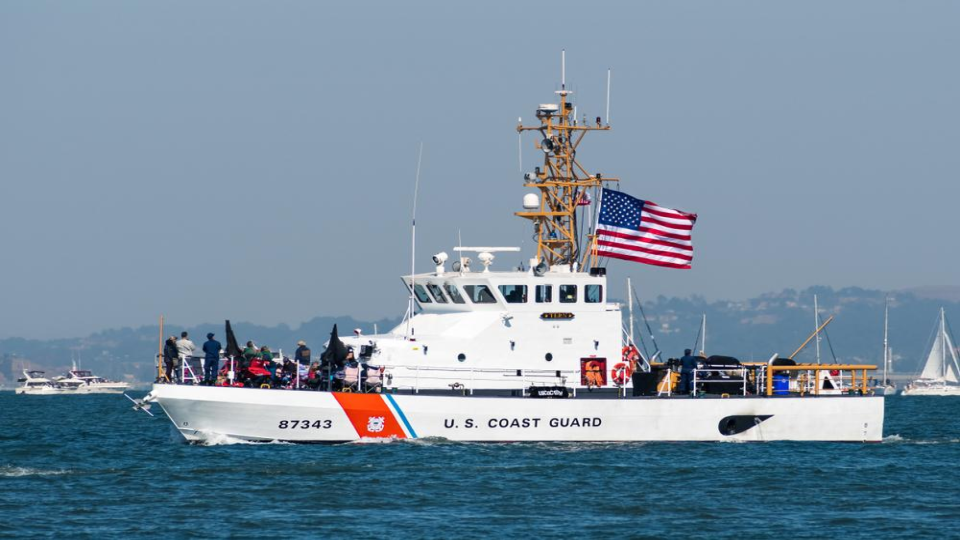
The US Coast Guard articulates part of its mission set to “Protect America’s Ports and Waterways.” And the Japanese Coast Guard echoes this with its declared mission in “Protecting the Safety of Maritime Traffic.” It must be accepted that these respective Coast Guards carry a natural inclusion of physical AI into these mission sets. As the seafaring world becomes more dependent on standardised physical AI platforms, there will be a need to exercise the scenarios on which such systems could fail, what to do in the event that they do, and how to ensure future resilience.
Bodies like the Coast Guard have the personnel, the culture, and the infrastructure to stage routine exercises that table scenarios of such capacity interruption, work with international partners to disseminate findings, and lead in refining the recommendations for ensuring that future maritime infrastructure – that is guaranteed to become evermore dependent on physical AI platforms – adopts standardised resilience guidance that can cope with everything from a failed patch, through to targeted attacks by cyber threat actors.
Bodies like the USCSI can offer frameworks and guidance routinely, but it will become incumbent on services such as the Coast Guard to operationalise sound guidance in a deployable fashion to the world’s seafaring industries that will become increasingly dependent on physical AI platforms to function. By building joint exercises to establish such resilience ahead of time, the US and Japanese Coast Guards can lead the way in establishing global maritime standards in securing physical AI robots.
Related reading: For additional perspectives on U.S.–Japan cooperation on physical AI, see 360° View: U.S.–Japan Cooperation on Physical AI—Scale, Rules, and Trust.
Author

Danny Steed
DRI-WISC Affiliate