

Returning to Delhi, seeing a nation's progress and the work still ahead
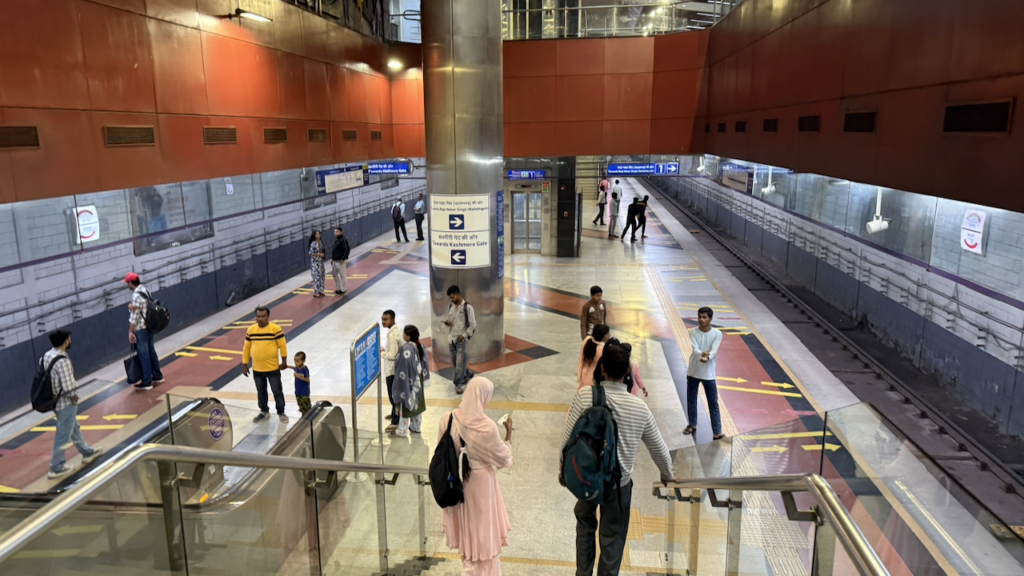
Riders at Janpath Metro station, New Delhi, November 2026. Photo: Mark Kennedy
Before returning to India, I revisited photographs I had taken in New Delhi in 2008 and 2010. They recalled the visible hardship that had stayed with me long after those trips.
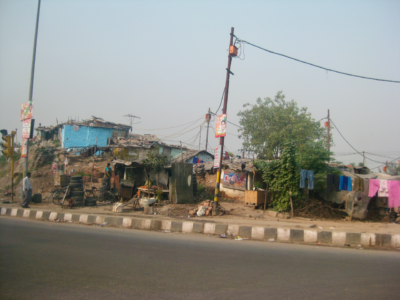
New Delhi, 2008. Photo: Mark Kennedy.
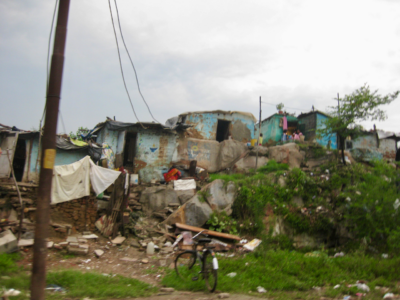
New Delhi, 2010. Photo: Mark Kennedy.
Walking and driving through Delhi on this visit, I was struck by the difference. Along the routes I traveled, I encountered nothing approaching some of the scenes I remembered. A young girl trying to sell me bracelets at India Gate brought those memories closest. I knew little about her circumstances, but the encounter reminded me that the opportunities opening across India still need to reach its youngest citizens.
Sixteen to eighteen years separate those photographs from today. What had changed beyond my field of vision?
A visitor cannot answer that question by looking out a car window. Routes differ. Neighborhoods are rebuilt. Hardship can be displaced as well as relieved. Yet the national evidence gives substance to the improvement I thought I could see.
The World Bank’s latest Poverty and Equity Brief for India, released in October, estimates that extreme poverty fell from 27.1 percent of the population in 2011 to 2.6 percent in 2023. At the higher poverty line the Bank uses for lower-middle-income countries, the share fell from 57.7 percent to 16.1 percent. By that measure, roughly 496 million people moved above the line.
These are purchasing-power-adjusted measures of household consumption, and the Bank itself cautions that comparisons across surveys require care. They also describe very modest living standards. Crossing a poverty line does not put a family beyond the reach of illness, lost work or an unexpected bill.
Even with those qualifications, the scale of progress deserves recognition.
One of my photographs from this visit shows women boarding an electric bus. It is an ordinary street scene, which is precisely why I like it. People are getting on with their lives, using a public service that helps them move through the city.
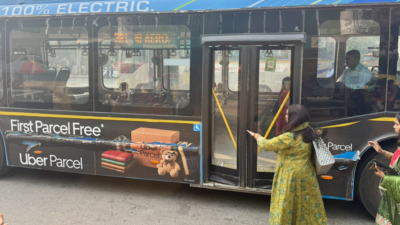
Passengers board an electric bus in New Delhi, November 2026. Photo: Mark Kennedy.
Nearby, Metro construction barriers carried messages about the future, among them “Women Empowerment, Empowering Delhi.”
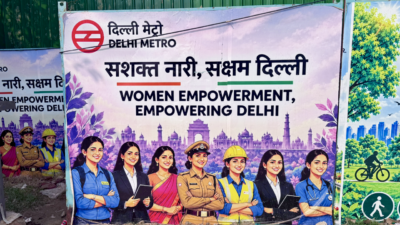
A Delhi Metro construction barrier, November 2026. Photo: Mark Kennedy.
A sign expresses an aspiration. A functioning transport system gives people a means to pursue it.
Delhi’s Metro already existed during my earlier visits, but its expanded reach stands out on this return. Janpath station, within walking distance of my hotel, opened in 2014, years after I took those older photographs.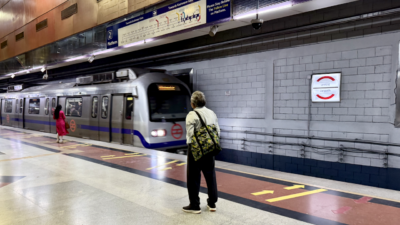
A train arrives at Janpath, November 2026. Photo: Mark Kennedy.
On a weekday afternoon in Diwali week, the platform was busy with office workers, students and families. Riders lined up behind painted arrows, stepped aside for those getting off and squeezed into crowded cars. A posted chart listed fares from 11 to 64 rupees, well under a dollar for even the longest trip.
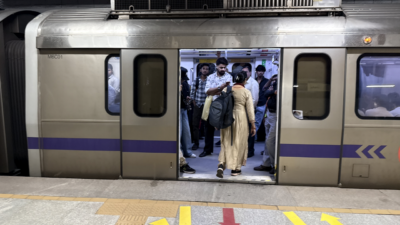
Boarding the Violet Line at Janpath. Photo: Mark Kennedy.
A Metro platform is easy to pass through without thinking about what it makes possible. For a passenger, it may widen the range of jobs within reach, make a course of study practical or shorten the daily commute. For a business, better connections can mean access to workers and customers. Those benefits depend on fares, reliability, safety and connections at either end of the journey. They are the everyday tests of whether infrastructure serves its purpose.
As a former university president, I think often about the relationship between education and opportunity. Learning opens doors, but people must be able to reach them. Electricity, transport, communications and functioning institutions help turn a person’s abilities into a livelihood.
That is why infrastructure belongs in discussions of freedom. Dependable services enlarge the choices people can realistically exercise: where to work, what to learn, whether to start an enterprise and how to provide for their families.
India’s gains reflect effort accumulated across governments, businesses, institutions and households. They cannot reasonably be credited to one leader or one program. Economic growth, rising employment, public investment, enterprise and support for vulnerable families have all played roles.
The unfinished work remains immense. Even after this progress, roughly 230 million people were still below the World Bank’s lower-middle-income poverty line in 2023. Many more lack the cushion that makes an improvement durable. Productive employment and dependable earnings will determine how far the next stage of progress reaches.
At the Wahba Initiative for Strategic Competition, much of our work concerns technology, infrastructure finance and productive capacity. These subjects can become abstract. We discuss capital mobilization, resilient supply chains and access to advanced computing.
Returning to Delhi brings their purpose closer.
The benefit of development must be visible in more reliable services, stronger businesses, productive work and wider opportunity. International partnerships should be judged in part by whether they help countries build and sustain those capabilities.
My photographs from 2008 and 2010 preserve moments, not the whole story of a city. The photographs I take today have the same limitation. Between them, however, lies a period of substantial national progress, supported by evidence far broader than my own experience.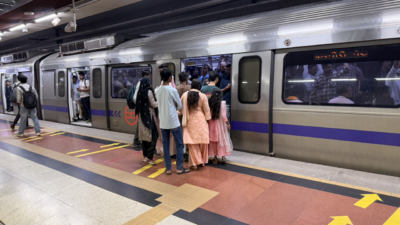
A family boards at Janpath. Photo: Mark Kennedy.
I leave encouraged by the distance India has traveled, and thinking about the girl at India Gate. The next chapter will be written in the opportunities available to her generation.
Author
Mark Kennedy
Director - Development Research Institute